Travel Gut: How to Keep Digestion Normal on the Road
New food, new schedule, strange bathrooms. Your gut notices.
Travel has a way of making even steady digestion improvise. Different food, lower hydration, less movement, more alcohol, and schedule chaos can all change how the gut behaves.
Why travel throws people off
Routine is a digestive tool. When meal timing, sleep, water, and movement all change at once, constipation, bloating, or urgency can show up fast.
That does not mean your gut is broken. It means it is responding to a very different week.
Pack anchors, not anxiety
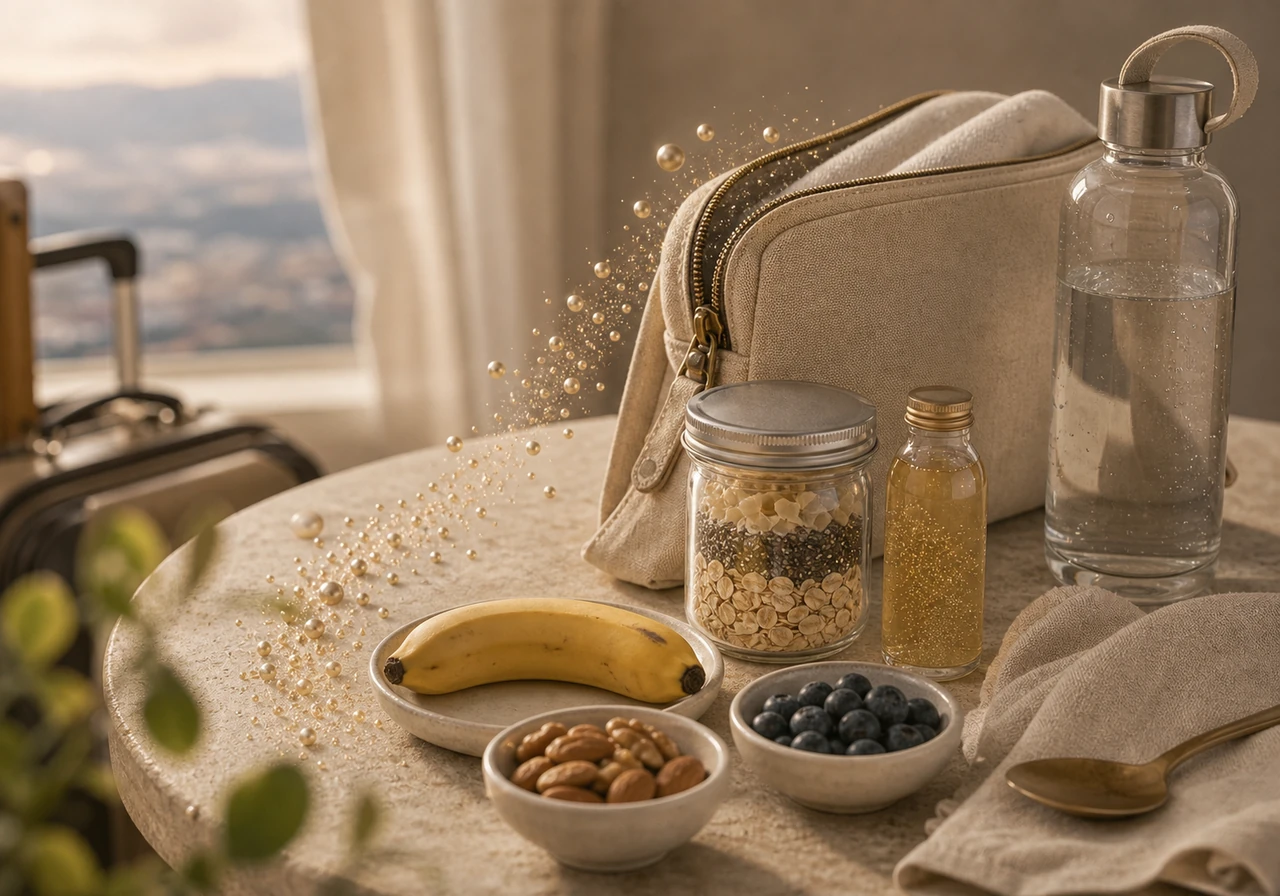
Choose portable gut anchors: oats, chia packets, nuts, fruit, electrolyte packets, or a plan to find yogurt, fermented vegetables, or beans at meals.
The goal is not to eat perfectly on vacation. It is to keep the gut from getting zero familiar signals.
The first-day rule
On day one, hydrate, walk, eat a real fiber source, and do not let travel snacks become the entire menu. One grounded day can prevent three weird ones.
If you cross time zones, keep expectations gentle. Your gut clock may need a minute.
- Travel disrupts digestion by changing routine, hydration, movement, and food.
- Portable fiber and fermented-food anchors can help maintain normal patterns.
- A grounded first day often prevents avoidable digestive drama.
- 1.Cryan JF, O'Riordan KJ, Cowan CSM, et al. (2019). The microbiota-gut-brain axis. Physiological Reviews.
- 2.Valdes AM, Walter J, Segal E, Spector TD (2018). Role of the gut microbiota in nutrition and health. BMJ.
Wild Origin makes microbiome testing and foods for wellness education, not medicine. This article is for curiosity and education — it is not medical advice, and our products are not intended to diagnose, treat, cure, or prevent any disease. If you are managing a health condition, talk to a qualified clinician.

Alcohol and the Microbiome
What a drink actually does to the trillions of microbes in your gut — and where the science is genuinely settled.