
Sleep, Stress, and Your Gut
Your gut listens to your schedule, not just your grocery list.
Gut health is usually sold as food. Food matters enormously, but the gut is also wired into sleep, stress, hormones, immune signaling, and the nervous system. Your microbes live inside a life, not a meal plan.
Stress changes digestion
Stress can alter motility, sensitivity, appetite, and gut barrier function. It can also change the microbial environment through hormones and immune pathways.
That is why a perfectly healthy meal can still sit badly during a brutal week.
Sleep sets the rhythm
Microbes and digestion follow daily rhythms. Irregular sleep, late meals, and disrupted routines can affect hunger, bowel patterns, and how steady the gut feels.
No one needs a perfect bedtime to care for their gut. But a more predictable rhythm gives the system fewer surprises.
The boring stack works
Fiber-rich food, fermented food, hydration, movement, daylight, and sleep are not flashy. Together, they create the background conditions a resilient gut prefers.
If your gut is loud, look beyond the plate. The calendar may be part of the symptom.
- Stress can affect gut motility, sensitivity, and microbial conditions.
- Sleep and meal timing can influence digestive rhythm.
- Gut care works best when food habits and life rhythms support each other.
- 1.Cryan JF, O'Riordan KJ, Cowan CSM, et al. (2019). The microbiota-gut-brain axis. Physiological Reviews.
- 2.Valdes AM, Walter J, Segal E, Spector TD (2018). Role of the gut microbiota in nutrition and health. BMJ.
Wild Origin makes microbiome testing and foods for wellness education, not medicine. This article is for curiosity and education — it is not medical advice, and our products are not intended to diagnose, treat, cure, or prevent any disease. If you are managing a health condition, talk to a qualified clinician.
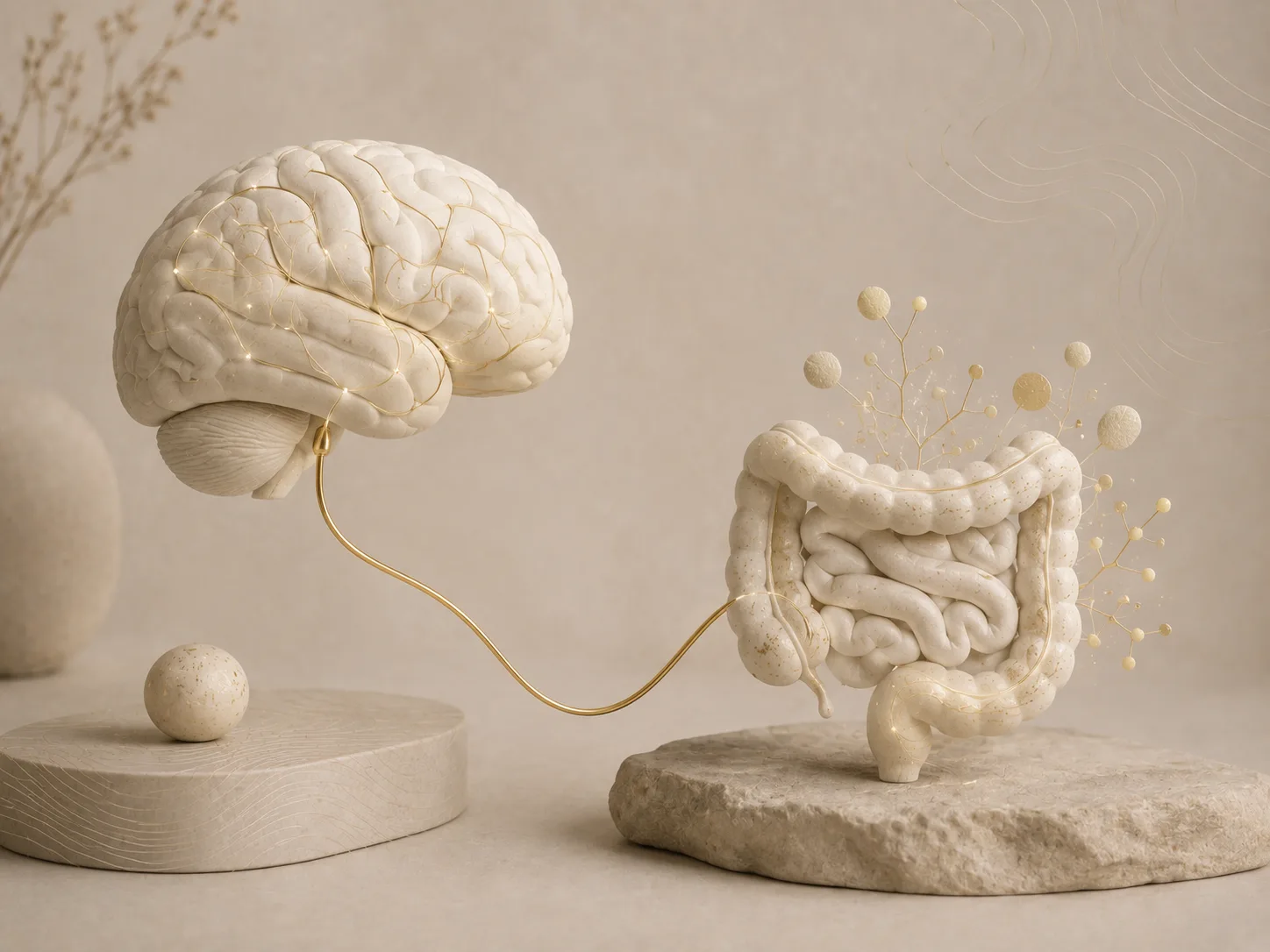
The Gut–Brain Axis
How your gut and your brain stay in constant conversation.

Your Gut and Your Mood
The emerging links between the microbiome, depression, and anxiety.