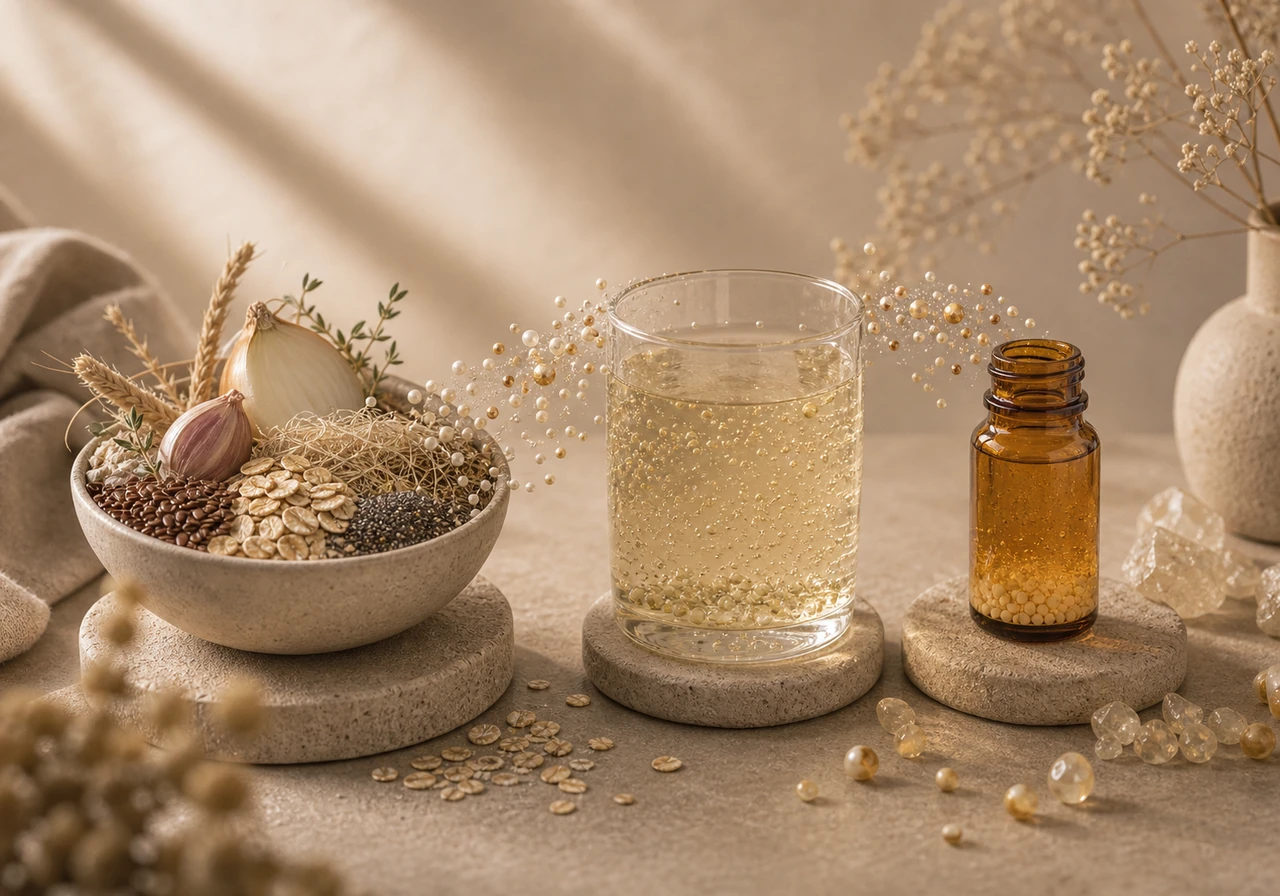
Postbiotics, Prebiotics, Probiotics: What’s the Difference?
Three gut-health buzzwords, one plain-English breakdown.
Gut-health language can feel like a supplement aisle with a thesaurus. Prebiotics, probiotics, and postbiotics are related, but they are not the same thing.
Prebiotics feed microbes
Prebiotics are substances, often specific fibers, that beneficial microbes can use. Think of them as food for the microbes already living in your gut.
Common food sources include onions, garlic, asparagus, oats, beans, bananas, and other fiber-rich plants.
Probiotics are live organisms
Probiotics are live microbes that, when consumed in adequate amounts, can provide a health benefit. Some come in supplements; others show up in fermented foods when they are still alive.
Different strains do different things, which is why vague probiotic claims deserve caution.
Postbiotics are what microbes make
Postbiotics are compounds produced by microbes, or preparations of inactivated microbes and their components, that may still have biological effects.
In real-food terms, fermentation can produce acids, peptides, vitamins, and flavor compounds that matter beyond the live microbes themselves.
- Prebiotics feed microbes, probiotics are live microbes, and postbiotics are microbial products or components.
- Food-based gut care often includes all three categories naturally.
- Specific claims depend on the strain, food, dose, and person.
- 1.Lei M (2026). Food Trends for 2026 Focus on Fiber-Maxxing, Global Foods, and More. Johns Hopkins Center for a Livable Future.
- 2.Koh A, De Vadder F, Kovatcheva-Datchary P, Bäckhed F (2016). From dietary fiber to host physiology: short-chain fatty acids as key bacterial metabolites. Cell.
- 3.Wastyk HC, Fragiadakis GK, Perelman D, et al. (2021). Gut-microbiota-targeted diets modulate human immune status. Cell.
- 4.Marco ML, Heeney D, Binda S, et al. (2017). Health benefits of fermented foods: microbiota and beyond. Current Opinion in Biotechnology.
Wild Origin makes microbiome testing and foods for wellness education, not medicine. This article is for curiosity and education — it is not medical advice, and our products are not intended to diagnose, treat, cure, or prevent any disease. If you are managing a health condition, talk to a qualified clinician.
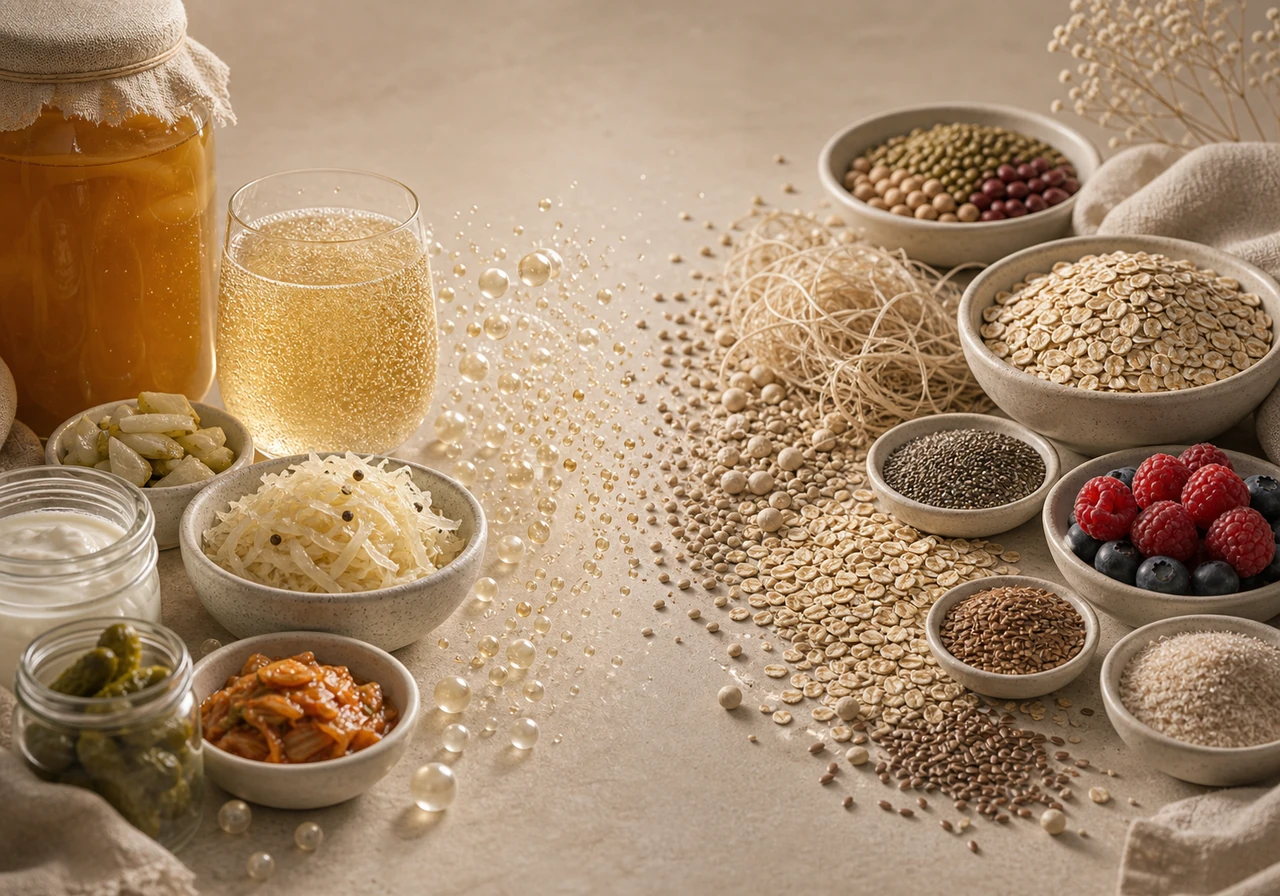
Fermented Foods vs. Fiber: Which Matters More?
One brings live culture. One feeds your resident microbes. Your gut would rather not choose.