The Microbiome After Antibiotics
After antibiotics, your gut does not need panic. It needs a patient rebuild.
Antibiotics can be necessary, even lifesaving. They can also disturb the gut microbiome. The useful question is what to do afterward without turning recovery into fear.
Antibiotics change the ecosystem
Antibiotics are designed to affect bacteria. Depending on the drug, dose, and person, they can reduce microbial diversity and open space for different organisms to expand.
Many people recover over time, but the timeline varies. Diet, age, prior microbiome, and repeated antibiotic exposure all matter.
Food is the rebuild plan
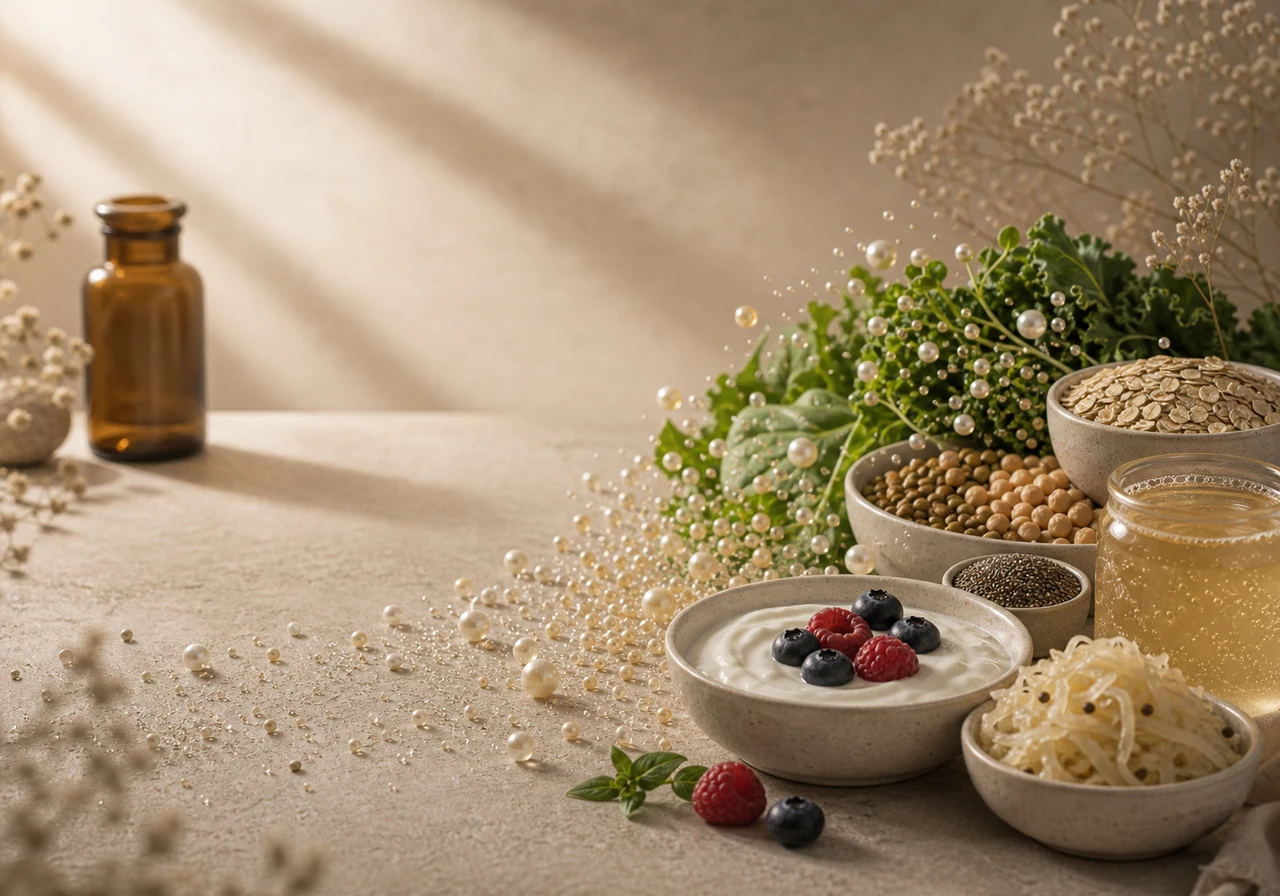
After a course of antibiotics, a gentle pattern of fiber-rich plants and fermented foods can support the ecosystem as it reorganizes. Start low and steady if digestion feels sensitive.
Think oats, beans, cooked vegetables, berries, yogurt, kraut, miso, or kefir depending on what you tolerate.
When symptoms are not normal
Severe diarrhea, fever, blood, dehydration, or symptoms that do not improve should be handled by a clinician. Food habits support recovery, but they do not replace medical care.
The calm plan is the best plan: follow your prescription, ask your clinician about probiotics if relevant, and rebuild the plate gradually.
- Antibiotics can temporarily disrupt gut microbial diversity.
- Fiber-rich plants and fermented foods can support a gradual rebuild.
- Severe or persistent symptoms need medical attention.
- 1.Lei M (2026). Food Trends for 2026 Focus on Fiber-Maxxing, Global Foods, and More. Johns Hopkins Center for a Livable Future.
- 2.Koh A, De Vadder F, Kovatcheva-Datchary P, Bäckhed F (2016). From dietary fiber to host physiology: short-chain fatty acids as key bacterial metabolites. Cell.
- 3.Wastyk HC, Fragiadakis GK, Perelman D, et al. (2021). Gut-microbiota-targeted diets modulate human immune status. Cell.
- 4.Marco ML, Heeney D, Binda S, et al. (2017). Health benefits of fermented foods: microbiota and beyond. Current Opinion in Biotechnology.
Wild Origin makes microbiome testing and foods for wellness education, not medicine. This article is for curiosity and education — it is not medical advice, and our products are not intended to diagnose, treat, cure, or prevent any disease. If you are managing a health condition, talk to a qualified clinician.
Constipation and the Gut Microbiome
How your gut community shapes transit time — and what actually gets things moving.
Fermented Foods vs. Fiber: Which Matters More?
One brings live culture. One feeds your resident microbes. Your gut would rather not choose.