Eating Kraut
Live, lacto-fermented vegetables and your gut.
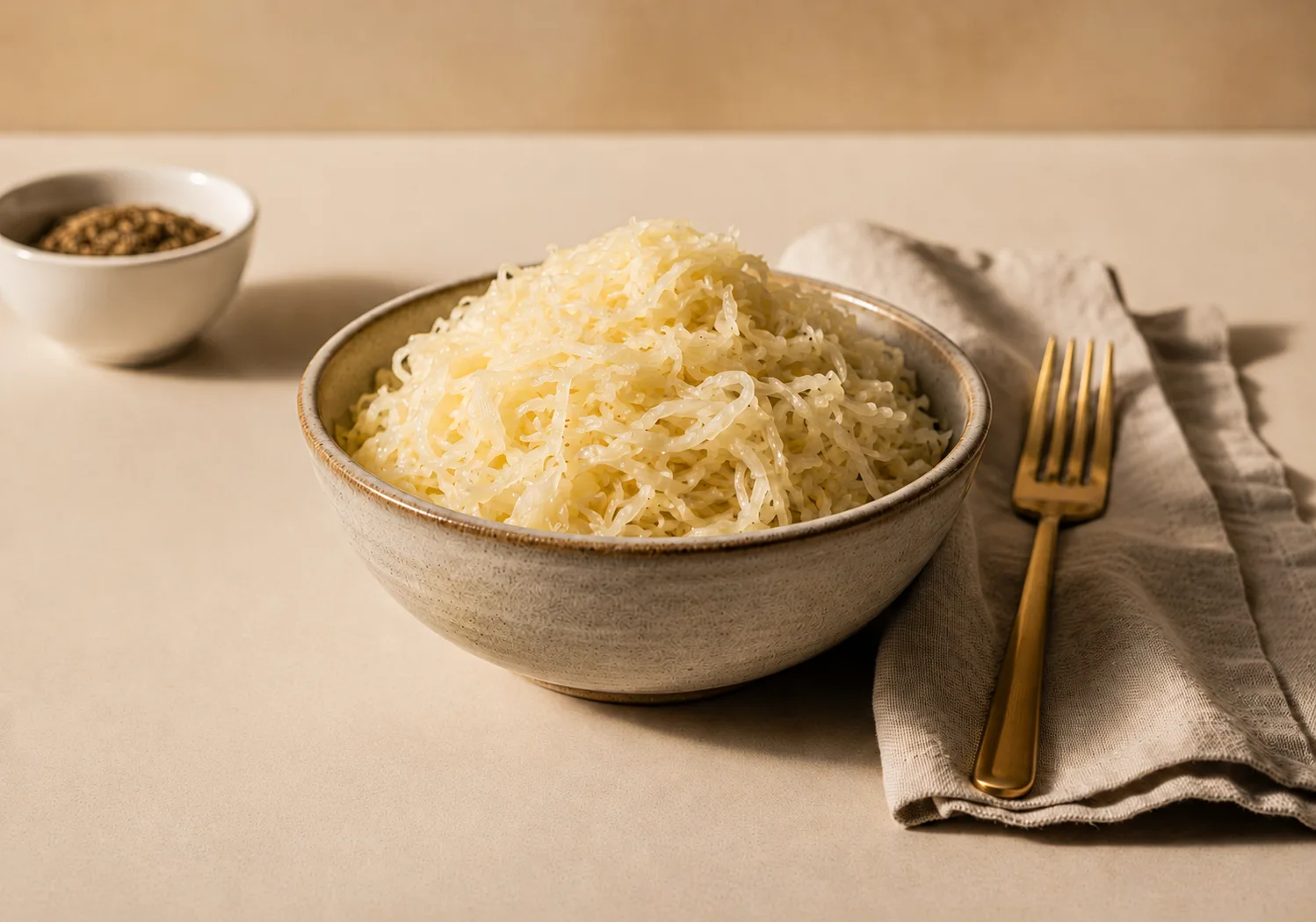
Raw sauerkraut is one of the simplest functional foods there is: cabbage, salt, time. Done right and left unpasteurized, it delivers a dense, living dose of the bacteria and acids that fermentation creates.
How lacto-fermentation works
Salt and an oxygen-free environment give lactic acid bacteria — naturally present on the vegetables — the edge they need. They convert the sugars in the cabbage into lactic acid, which preserves the food, creates that clean sour tang, and builds an environment hostile to spoilage organisms.
The catch is heat. Pasteurization extends shelf life but kills the very cultures that make raw kraut interesting. Live kraut stays in the fridge for a reason.
Live cultures and diversity
A landmark Stanford trial studied fermented foods directly: a diet rich in them increased participants' gut microbiome diversity and lowered markers of inflammation over ten weeks — an effect a high-fiber diet alone didn't match in the same study.
Reviews of fermented foods point the same direction: they can contribute live microbes and bioactive compounds that support gut health, on top of the nutrition already in the vegetables.
Getting the most from it
Choose raw and unpasteurized, keep it cold, and eat it regularly rather than occasionally — consistency matters more than any single big serving. As with all ferments, start with a small amount and build up so your gut can adjust comfortably.
- Raw kraut is preserved by lactic acid bacteria — and only raw, unpasteurized kraut keeps those cultures alive.
- A fermented-food-rich diet has been shown to raise microbiome diversity and lower inflammation.
- Choose raw, keep it refrigerated, and eat it consistently in modest servings.
- 1.Wastyk HC, Fragiadakis GK, Perelman D, et al. (2021). Gut-microbiota-targeted diets modulate human immune status. Cell.
- 2.Dimidi E, Cox SR, Rossi M, Whelan K (2019). Fermented foods: definitions and characteristics, impact on the gut microbiota and effects on gastrointestinal health and disease. Nutrients.
- 3.Marco ML, Heeney D, Binda S, et al. (2017). Health benefits of fermented foods: microbiota and beyond. Current Opinion in Biotechnology.
Wild Origin makes microbiome testing and foods for wellness education, not medicine. This article is for curiosity and education — it is not medical advice, and our products are not intended to diagnose, treat, cure, or prevent any disease. If you are managing a health condition, talk to a qualified clinician.